
AI Search Optimization: What's Real and What's Not
A cottage industry* has been forming around AI search, and its development is nothing short of interesting.
We can now choose from a growing selection of AI search tools, frameworks, certifications, academies, influencers, and affiliate programs, as well as agencies, consultants, and service providers.
But the most surprising thing about this seemingly blooming ecosystem is how much of it is built on a thin foundation:
Observing outputs and working backwards.
This isn't bad in itself, as LLMs do mention brands and cite sources all the time — that data definitely deserves attention.
In addition, the incentives are genuine: The SEO industry is projected to be worth ~90 billion in 2026, and AI search is projected to be worth much more.
So, what is the problem, then?
Ironically enough, it's visibility.
The rules, requirements, and processes that get a brand mentioned, cited, or referenced in AI answers aren't public.
And in a market where everyone is aggressively promising AI visibility, the lack of standards can lead to confusion among buyers and practitioners.
What we know about AI search (a compressed version)
Some things are reasonably well established in AI search. For example, we know that:
LLMs are trained on vast amounts of content from the web (on-page content and structured metadata).
High-quality content (by most measures) has an advantage going in.
We also know that AI tools don't rely solely on training data.
They use a series of techniques (with RAG as the main one) to pull fresh content from the web before generating a response (maybe in the future we'll see Daddy Karpathy's LLM wikis in action, too).
Finally, we are aware that traditional SEO still does a lot of heavy lifting when it comes to appearing in AI outputs:
Structured, clear, authoritative content performs better.
Publishing regularly and a strong backlink profile are strong signals.
Earned media still earns.
But beyond that, things get murky fast, as AI tools are largely black-boxed.
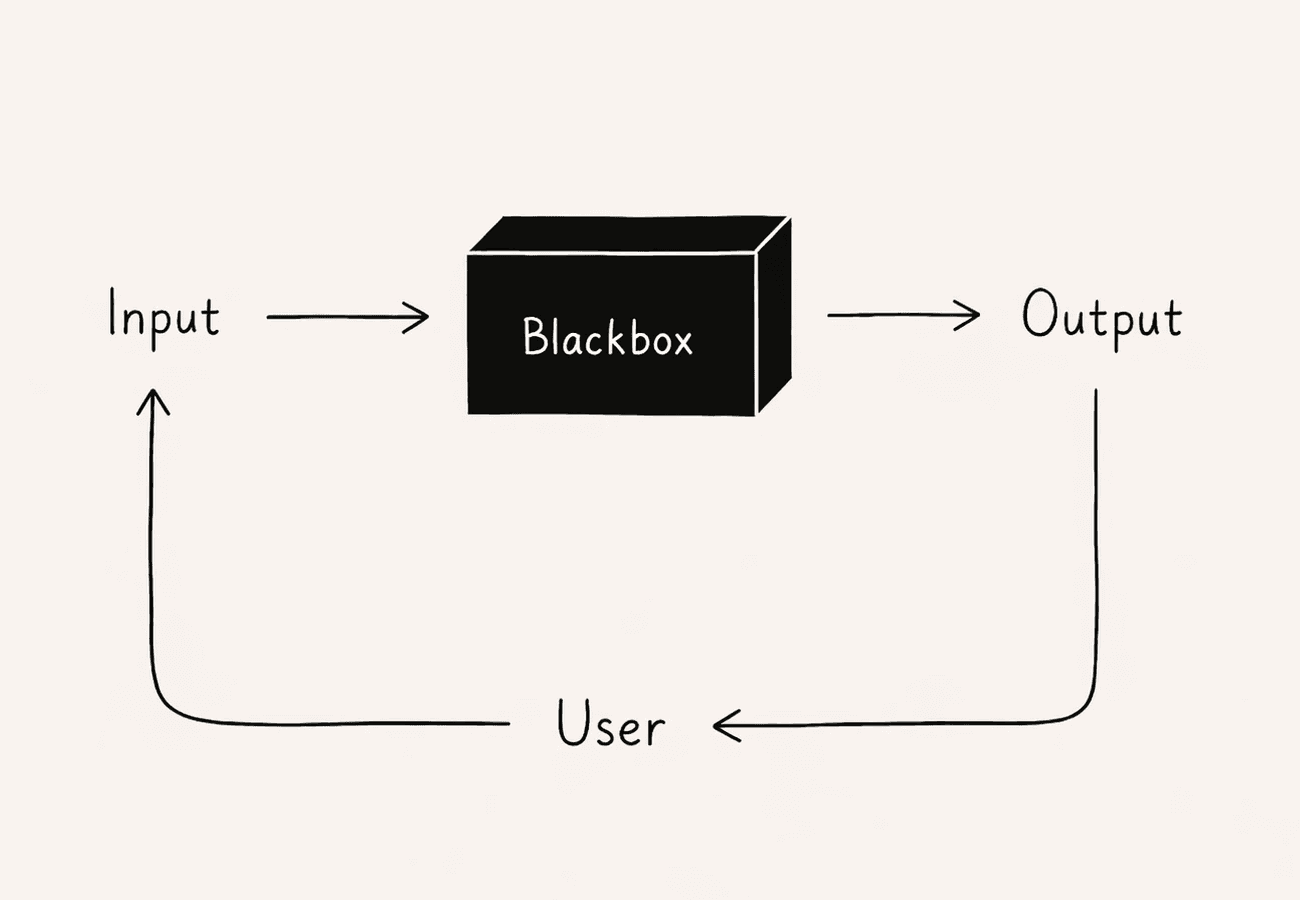
So what do AI search tools and practitioners do?
We observe, experiment, and infer.
And while this happens, money keeps moving. Traditional SEO budgets are being questioned, rebranded, or redirected toward AI visibility.
But this time, the trade-offs are different.
Where search lives now
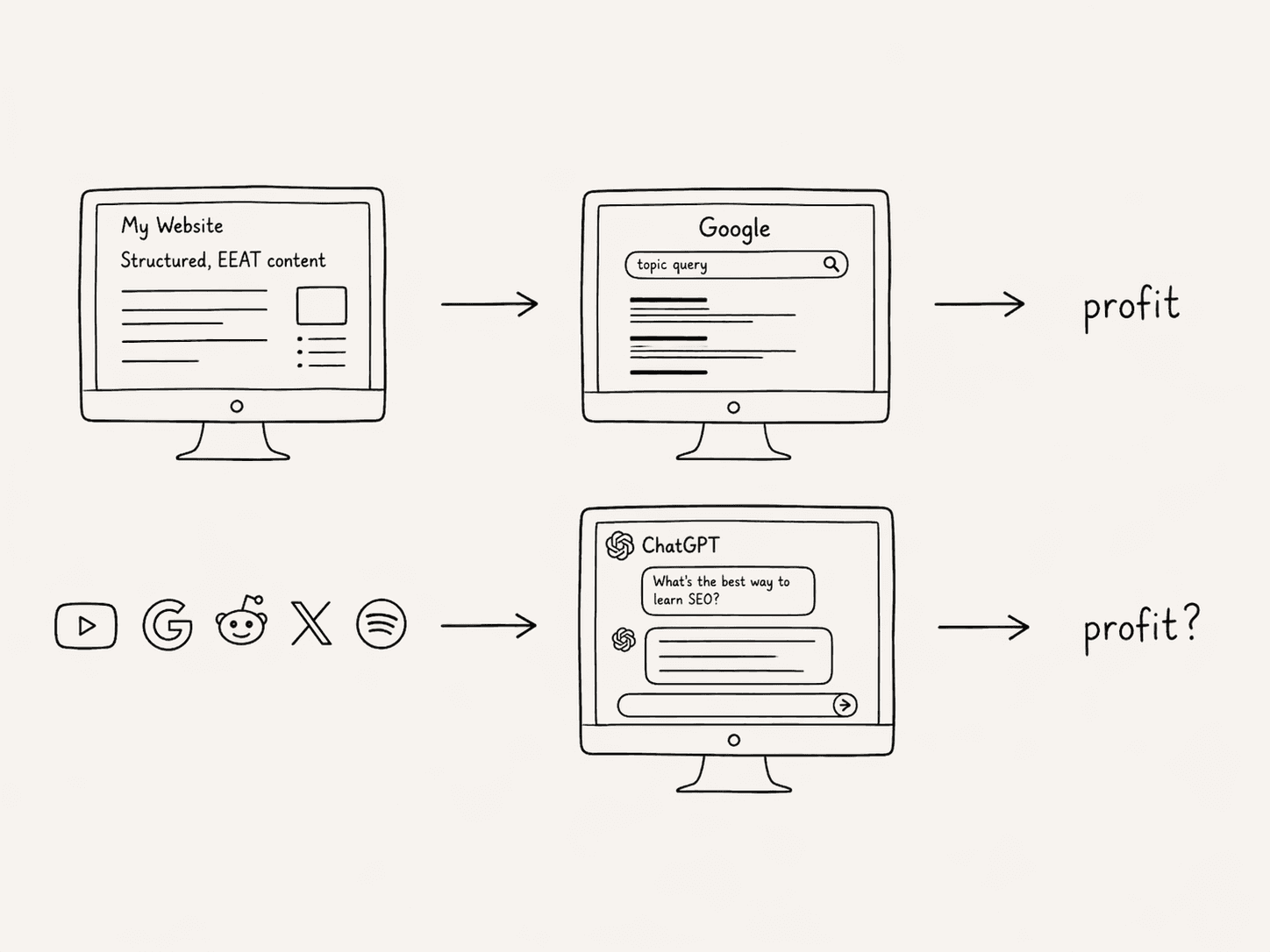
With traditional SEO, the focus was a lot simpler.
EEAT content could make your brand break the top 1-3 positions in search engine result pages; it gives a clean shot most of the time.
Now, the focus has shifted from one platform (Google) to many.
SEO might be shrinking, but search is growing
Before the launch of ChatGPT in 2022, the volume of questions people ask online had been growing steadily for years.
From there on out, it exploded.
At the same time, the distribution of search demand began to shift.
The same growing volume of search is now spread across three major surfaces:
Traditional search (Google).
Social media (LinkedIn, Reddit, TikTok, YouTube).
AI tools (ChatGPT, Perplexity, Claude, Gemini).
Visibility-wise, two challenges emerge:
Where to show up, for whom, and for what? (brand awareness, demand gen, both).
How to measure the impact of AI search efforts in a black-boxed environment?
What this means if you're buying AI optimization tools and services
Most of what's being sold right now frames AI search as the successor to SEO. Old playbook retired, new one available for purchase.
It's a clean narrative, but sort of misses the point: The shift isn't from SEO to AI search. It's from one dominant surface to multiple ones.
Which means the right question isn't "how do I optimize for AI search?"
It's "which surfaces matter for my brand, and what does showing up on each of them require?"
The answer depends entirely on:
Who you are.
What you sell.
Where the audience is.
Your goals.
None of this is new, but if you nail it, the chances of popping up in AI search increase.
It's not the same for everyone
The idea that there's a universal AI search strategy is part of what's being sold (and part of what deserves scrutiny).
Let's use an industrial equipment manufacturer as an example, and say that engineers and procurement managers doing deep research are the audience.
In this context, a Perplexity citation probably isn't their highest leverage move.
What might actually work is a library of long-form YouTube videos showing exactly how their machines operate — detailed enough to answer the questions their buyers are asking.
The video library may win directly with engineers before it ever wins inside AI tools.
Moreover, if the videos produce transcripts, embeds, citations, forum discussions, and documentation, they also create more retrievable material for AI systems.
And that's a huge signal to then get retrieved (and explained, and talked about) by AI tools, because AI tools retrieve what's authoritative and specific.
In this example, the main surface is YouTube, and perhaps some technical, on-page documentation of the equipment.
If these are done right, the chance of getting mentioned by AI tools increases.
There are two different dimensions to realizing this:
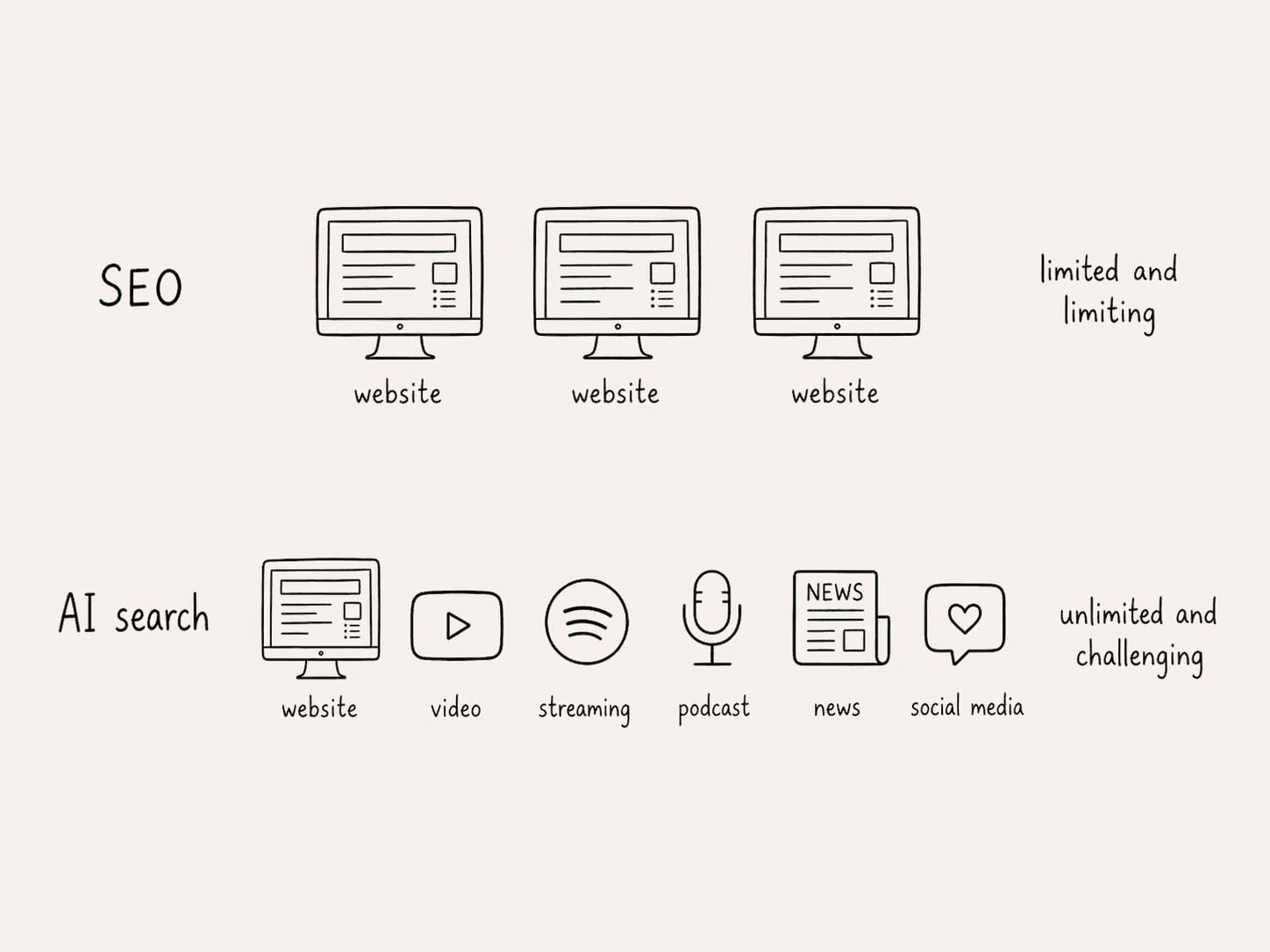
SEO was linear, standardized, and relatively repeatable.
AI search (as in getting mentioned and cited) is not necessarily linear, and standardization has not been achieved yet.
In other words, it doesn't look the same for everyone.
AI search measurement ≠ AI search optimization
They are frequently bundled and sold as the same thing. They aren't.
Measuring AI search visibility means tracking how often your brand appears in AI-generated answers across different tools and queries.
Some platforms do this reasonably well — scraping outputs, running automated prompts, building share-of-voice metrics across ChatGPT, Perplexity, Gemini, and others.
That data is probably real and observational (which is fine; observation is where understanding starts).
The problem is what comes next.
Because AI search tools are black-boxed, there's no direct line between what you observe and why it's happening.
Sometimes that inference is rigorous and well-reasoned. Other times it's a best guess dressed in a dashboard.
What comes next: AI search is way more interesting than SEO
AI-mediated discovery may become bigger than SEO, but it is already broader than SEO.
But more interesting than the size is the shape.
For two decades, the web funneled everything through websites. You built one, you optimized it, you ranked it. Easy peasy.
We're seeing an explosion of channels and formats to achieve the visibility that only SEO could bring.
AI search-wise, brands are now incentivized to think beyond the website and into things like:
Reddit posts and threads.
Long and short-form video for YouTube, Instagram, TikTok.
LinkedIn company pages and about sections (yes, they get cited a lot).
Public-facing documentation that offers users better, more actionable context.
Podcast episodes and transcripts.
For us content creators and SEO professionals, this is good news: More ways to be specific, useful, and genuinely authoritative.
AI search sits in the middle of all of it — retrieving, synthesizing, surfacing what's earned the right to be there.
The brands that understand this will make themselves easier to retrieve and harder to ignore.
*cottage at Silicon Valley scale, where a 100M investment rarely makes the headlines.